About SAMURAIDREAM

One-of-one statement pieces.
Samurai history. New York individuality.

One of one.

Every SAMURAIDREAM piece stands on its own. A singular composition of color, pattern, and presence, chosen to become part of one person's story.

Our collection brings together one-of-one statement pieces, each with a distinct character. A sweeping sleeve, a concentrated field of color, or an unexpected meeting of patterns can give an entire look its direction. We begin with that individual presence and build around it.

The world of SAMURAIDREAM draws on the lives and visual culture of historical samurai. Their choices in dress, their artistic interests, and the identities they projected offer a starting point for our own questions: what makes a person recognizable, and how can clothing carry that sense of self?

Textile detailImage forthcoming

Behind the armor.

The history of the samurai stretches across centuries, through changing wars, governments, and ways of life.

Japan's warrior elite held political power from the twelfth through the nineteenth century. Their world included military conflict and intricate cultural pursuits. Among its leaders were poets, calligraphers, collectors, and patrons of painting and theater. The cultivation of martial and cultural arts could coexist in the same life. [1]

Dress also had a public role. During the peace of the Edo period, armor appeared in ceremonies and processions. These occasions gave regional lords a setting in which to display their taste and status. Silhouette, material, and ornament became part of how they presented themselves to the world. [2]

SAMURAIDREAM finds inspiration in that attention to presence. The way a garment is assembled and worn can communicate something before its wearer speaks.

Historical portraitImage forthcoming

A life. A distinct image.

Real people give this history its texture. Date Masamune offers one striking example.

The Sendai City Museum preserves black-lacquered armor associated with Masamune. Its accompanying jinbaori, a battle coat, combines black and scarlet woolen cloth with gold trim. Sendai's cultural-property record describes the coat's strong foreign influences and bold division of color. Here was a historical wardrobe shaped by contact, contrast, and an unmistakable visual point of view. [3]

That is the kind of detail that interests us: a specific life, a particular object, a choice that still holds the eye centuries later. It gives our creative imagination somewhere concrete to begin. Color becomes a way to explore character; a silhouette becomes a way to think about identity.

New York studyImage forthcoming

History meets New York.

New York gives this sensibility a contemporary setting: a city experienced at street level, among people with different histories and different ways of being seen.

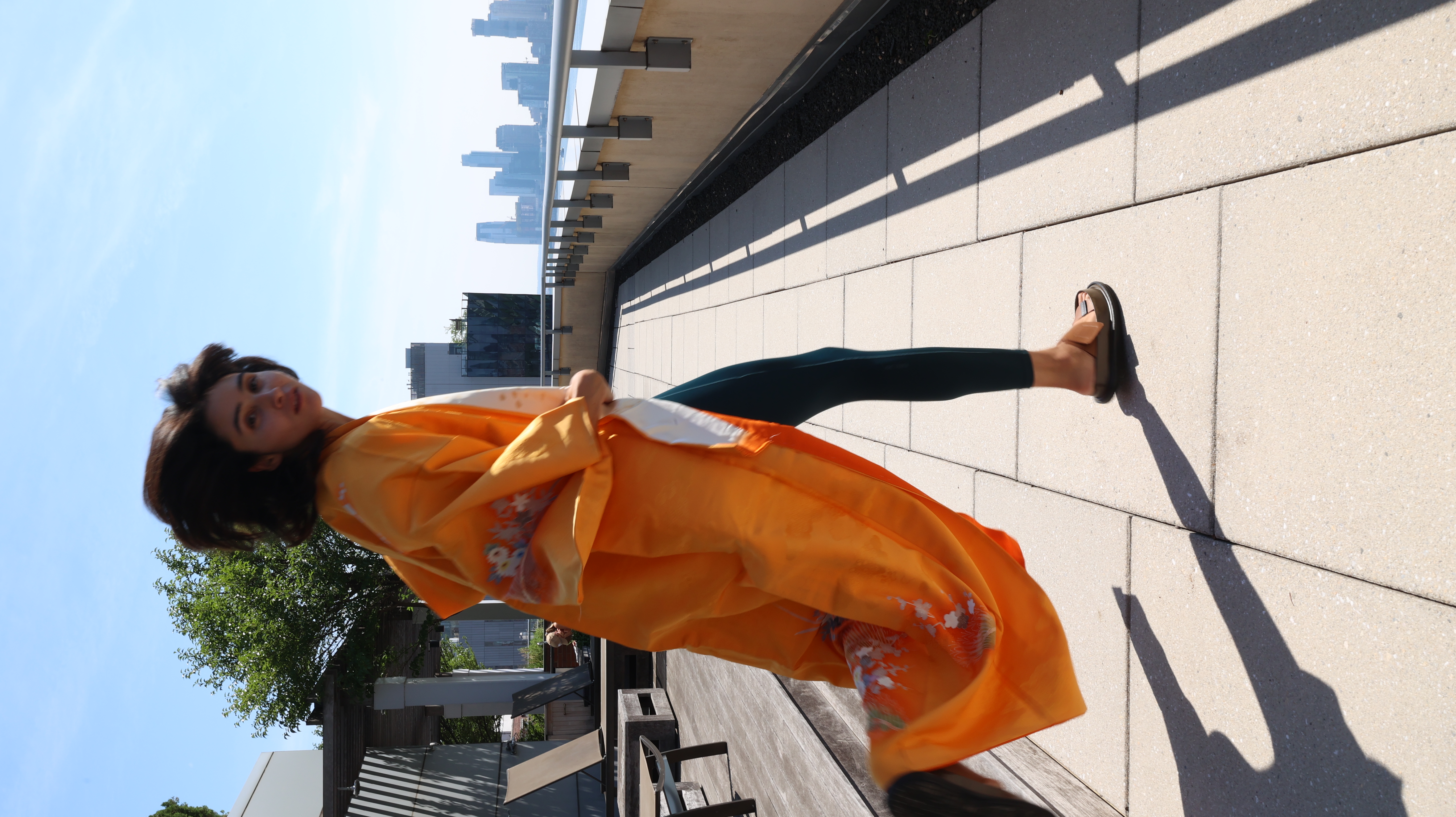
We imagine a patterned kimono against the straight lines of a building. A vivid obi above a dark skirt. Fabric moving on a rooftop, then through an evening crowd. The city changes the frame around a piece and allows its character to emerge in another light.

For SAMURAIDREAM, New York represents the freedom to bring your own history into the present. An outfit can hold several influences at once and still feel entirely personal. Our pieces invite that kind of dressing: expressive, deliberate, and open to the unexpected.

The next story is yours.

A statement piece begins with a distinct identity. Wearing it adds another.

Choose it for the color that stays with you, the pattern you keep returning to, or the way it changes how you carry yourself. Pair it with something familiar. Give it a new setting. Let the details become part of your own visual language.

This is the meeting at the heart of SAMURAIDREAM: historical imagination, the energy of New York, and the individuality of one person. One piece, worn your way.

Explore the collection

Direction

David DeHannay

Chief Creative Director

Joseph Choi

Chief Marketing Officer

Ray Song

Executive Director